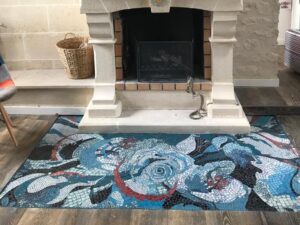
Artistic mosaic is much more than a simple assembly of colorful fragments.
It is a meticulous, passionate process where each step contributes to the birth of a unique piece. Behind the radiant beauty of a floor or wall adorned with tesserae lies a true worksite, blending imagination, technique, and craftsmanship. Let’s dive into the behind-the-scenes of creation—from sketch to final installation.
The Idea Takes Shape: The Sketch
It all starts with an idea—an urge, a commission, an inspiration. The mosaic artist engages in dialogue with the client to understand their expectations: desired ambiance, dimensions, message to convey, and technical constraints. From this discussion, a first draft emerges, often drawn by hand. The sketch becomes the guiding thread of the project—it defines the style, shapes, and color palette, and serves as a reference throughout the entire process.
This phase requires as much artistic sense as adaptability. It’s not just about creating a beautiful image on paper, but an artwork that integrates with the architecture of the space, interacts with the light, and withstands the test of time.
Material Selection and Studio Preparation
Once the sketch is approved, it’s time to choose materials: enamels, porcelain stoneware, glass paste, natural stones… Each material has its own texture, shine, and nuances. The mosaic artist then cuts the tesserae (the small pieces that will form the image) using nippers, hammers, or specialized machines. This preparation work can take several days—or even weeks for large murals.
At the same time, the artist prepares the backing: mesh, kraft paper, or direct panels, depending on the chosen technique (direct, indirect, or double-indirect method). This is a crucial step, as poor preparation could jeopardize the entire project.
Assembly: Patience and Precision
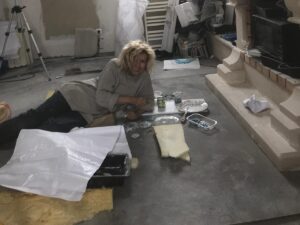
The assembly is a true exercise in patience. Tessera by tessera, the artist composes the image, closely following the sketch but also allowing room for intuition. The mosaic lives and evolves over time. Sometimes, a shift in tone or rhythm becomes necessary to maintain visual balance.
Some artworks are assembled in the studio, others directly on the wall or floor. The chosen method depends on the constraints of the site, access to the space, available time, and working conditions.
On-Site Installation: The Artwork Comes to Life
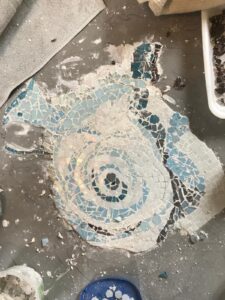
Finally comes the time for on-site installation if the piece was created in the workshop. Each prepared fragment is carefully glued, aligned, and adjusted. Grout is then applied, filling the spaces between the tesserae and unifying the surface.
It is often at this stage that the work reveals its full power. What was once a fragmented design in the studio comes to life on the wall or floor, interacting with the space, capturing natural light, and drawing the eye.
A Lasting Work, a Transformed Space
Once installed, the mosaic becomes an integral part of its environment. It transforms the atmosphere, attracts attention, invites contemplation. Every detail tells a story, every color evokes emotion. This is the magic of artistic mosaic: turning a wall or floor into a work of art, and a place into an experience.